Trail Cameras
Showing 13–24 of 40 results
-
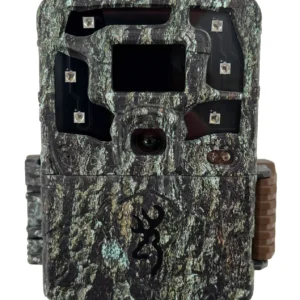
Browning Strike Force Pro X 1080 Trail Camera
$139.95 Add to cart -
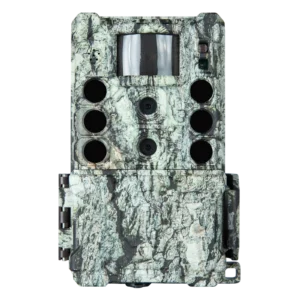
Bushnell Core DS-4K No Glow Trail Camera
$179.95 Add to cart -
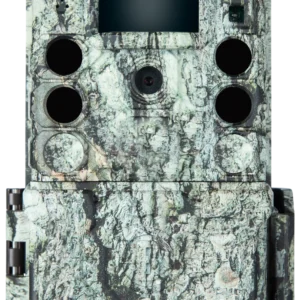
Bushnell Core S-4K No Glow Trail Camera
$149.95 Add to cart -
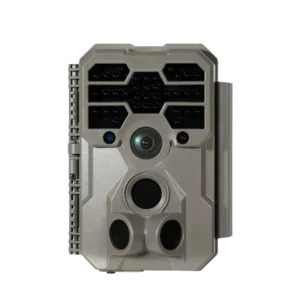
GardePro A60 4K Trail Camera
$99.99 Add to cart -
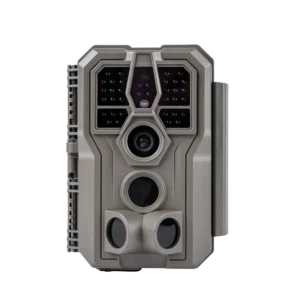
GardePro E5 2.0 Trail Camera
$79.99 Add to cart -
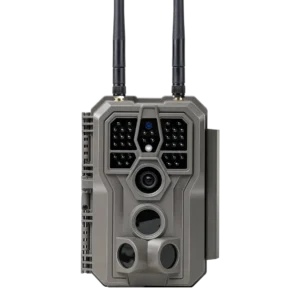
GardePro E8 2.0 Pro WiFi Trail Camera
$99.99 Add to cart -
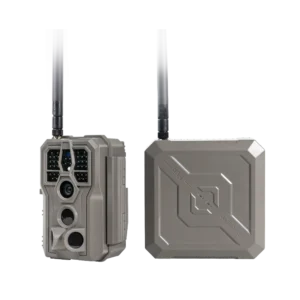
GardePro Link 1.0 Long-Range WiFi Trail Camera
$224.99 Add to cart -
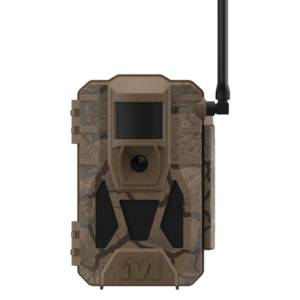
Muddy Matrix 2.0 Cellular Trail Camera
$99.95 Add to cart -
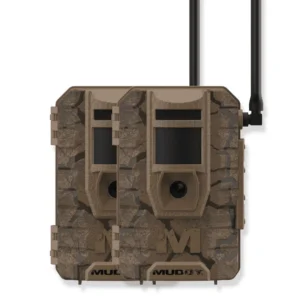
Muddy Mitigator 2.0 Cellular Trail Camera 2-Pack
$69.99 Add to cart -
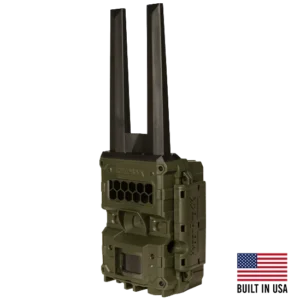
Reconyx HyperFire 4K Covert IR Cellular Trail Camera
$449.95 Add to cart -
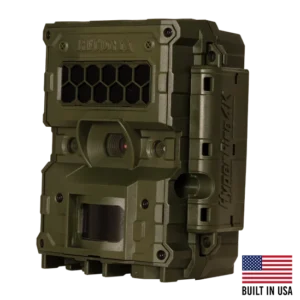
Reconyx HyperFire 4K Ultra HD No-Glow Trail Camera
$399.95 Add to cart -
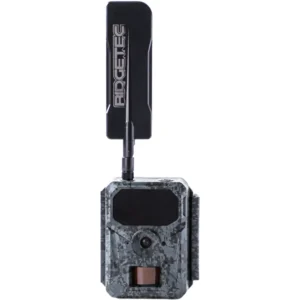
Ridgetec Lookout-X 4G LTE Cellular Trail Camera
$179.95 Add to cart
How do you choose a trail camera?
Start with how you want to get your photos, then compare four numbers that every listing on this site shows in its spec table.
| Spec | What it means | Good target for deer hunting |
|---|---|---|
| Trigger speed | Delay between motion and the photo | 0.5 s or faster (0.2–0.3 s catches walking deer) |
| Detection range | How far the motion sensor reacts | 60–100 ft for field edges and food plots |
| Flash type | No-glow (940 nm) is invisible; low-glow (850 nm) reaches farther | No-glow on public land or near trails |
| Battery life | Months between battery swaps | 3+ months on AA lithiums or a solar panel |
How far can a trail camera detect motion?
Most current trail cameras detect motion between 60 and 100 feet, and a few premium models reach 120 feet. Real-world range drops in summer heat because the passive infrared sensor detects the difference between body heat and the air temperature.
Where should you mount a trail camera for deer?
Mount it 3–4 feet high on a tree 10–20 feet from a trail, scrape, mineral site or food plot entrance, angled slightly across the trail rather than straight at it, and facing north where possible so the sun never shines into the lens.
FAQ
Do I need a data plan for a trail camera?
Only for cellular trail cameras, which send photos over a mobile network. WiFi and SD card trail cameras need no plan.
What is the difference between no-glow and low-glow trail cameras?
No-glow cameras use 940 nm infrared LEDs that are invisible to deer and people; low-glow cameras use 850 nm LEDs that show a faint red glow but light subjects farther away at night.
How many megapixels does a trail camera need?
Image quality depends far more on the sensor and lens than on the megapixel claim. Many cameras advertise 20–40 MP through interpolation, while the true sensor resolution is often 2–8 MP.
Are trail cameras legal to use while hunting?
Trail cameras are legal for scouting in most US states, but some states restrict cellular (real-time) cameras during hunting season or on public land. Check your state wildlife agency rules before you hang one.