The best trail cameras under 200 dollars are the Browning Recon Force Elite HP5 Ultra ($159.95) for SD card scouting, the Bushnell Core DS-4K No Glow ($179.95) for the sharpest day and night images, and the Tactacam Reveal X 4.0 ($129.99) if you want photos sent to your phone. You do not need to spend more than $200 to get a fast trigger, long night range and months of battery life.
Trail cameras under $200 have improved enormously. Features that cost $400 a few years ago, such as sub-0.3-second triggers, 4K video, dual image sensors and 100-ft detection, now appear in mid-priced cameras. The trick is knowing which features matter for how you hunt. Below are our picks across SD card and cellular cameras, with the manufacturer specs side by side.
Which are the best trail cameras under 200 dollars?
| Camera | Type | Trigger | Night range | Price |
|---|---|---|---|---|
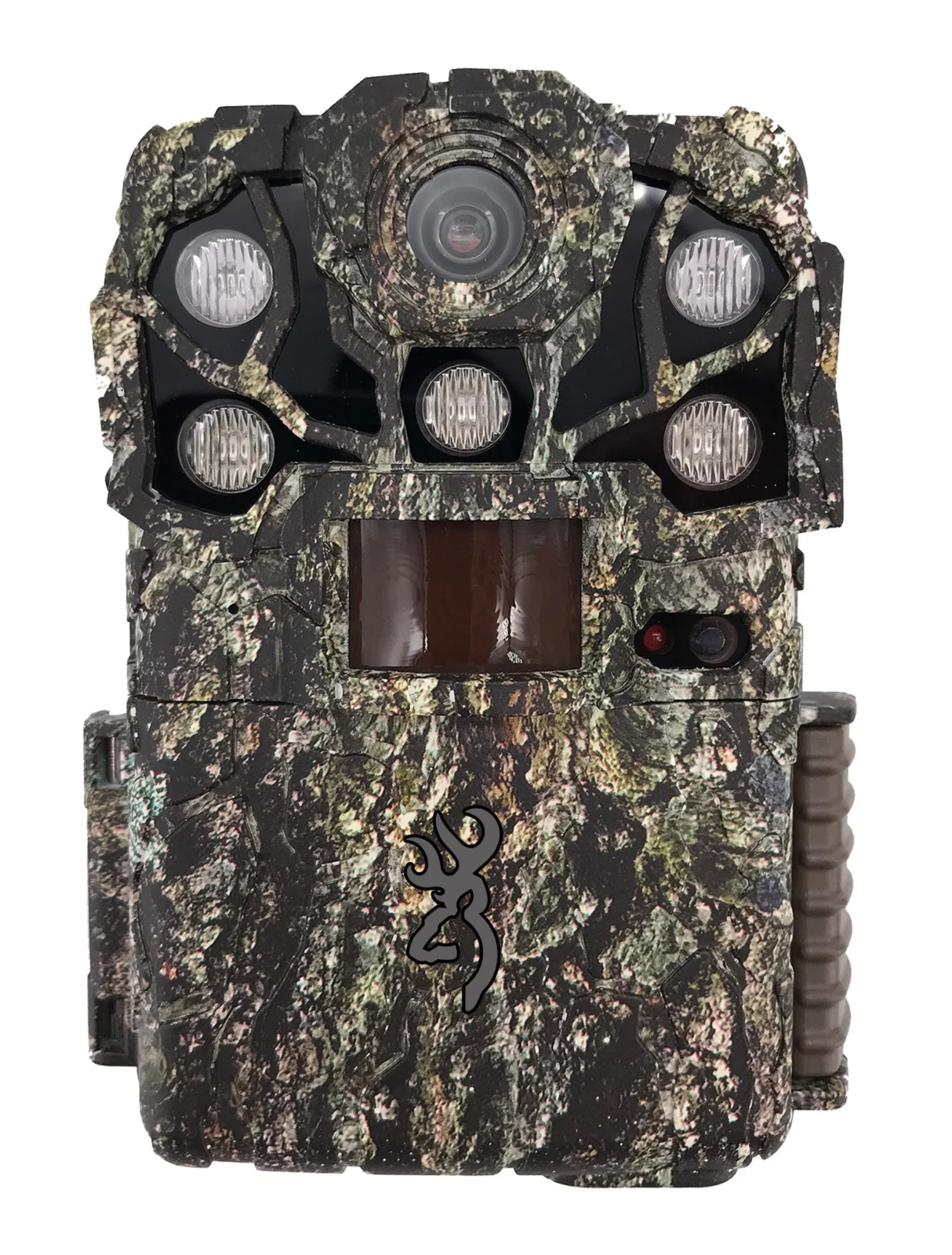
| Browning Recon Force Elite HP5 Ultra | SD card | 0.1–0.7 s adjustable | 130 ft | $159.95 |
| Browning Spec Ops Elite HP5 Ultra | SD card, no-glow | 0.1–0.7 s adjustable | 100 ft | $169.95 |
| Bushnell Core DS-4K No Glow | SD card, dual sensor | About 0.15–0.2 s | About 100–120 ft | $179.95 |
| Browning Strike Force Pro X 1080 | SD card | 0.22 s | 120 ft | $139.95 |
| Browning Dark Ops Pro DCL Nano | SD card, dual lens, no-glow | 0.15 s | 100 ft | $169.95 |
| Tactacam Reveal X 4.0 | Cellular | Under 0.5 s | Low-glow, 96+ ft detection | $129.99 |
| Spypoint Flex-Dark | Cellular, no-glow | 0.3 s | Up to 100 ft | $119.95 |
| Yellowstone.ai Y2 | Cellular, no-glow | 0.4 s | 940 nm no-glow | $124.99 |
All specs are manufacturer ratings. Prices are our current prices and may change.
What should you look for in a sub-$200 trail camera?
- Trigger speed of 0.5 seconds or faster. Anything slower misses deer walking past at close range.
- Night range of at least 60–80 ft. Most mature-buck photos happen after dark until the rut.
- Battery life measured in months. Cameras that run on 6–8 AA batteries for several months save you money and trips.
- Real image quality, not megapixel claims. Many cameras advertise 24–46 MP through interpolation. Dual sensors and good lenses matter more.
- A screen or app for setup. A color screen makes aiming at a scrape or trail much easier.
Which is the best SD card trail camera under $200?
The Browning Recon Force Elite HP5 Ultra. It combines an adjustable 0.1–0.7-second trigger, up to 100 ft of detection, a 130-ft infrared flash, 46 MP photos, 1440p video and a 2-inch color screen, all for $159.95. Its Timelapse Plus mode records an entire food plot on a schedule while still firing when a deer triggers the sensor. If you hunt pressured or public ground, its sibling the Spec Ops Elite HP5 Ultra swaps the long-range flash for an invisible no-glow flash.
Which budget camera has the best image quality?
Dual-sensor and dual-lens cameras produce noticeably sharper night photos, because one sensor or lens is dedicated to infrared. The Bushnell Core DS-4K No Glow records 4K video at 30 fps with separate day and night sensors, and Bushnell rates its battery life at up to 12 months on 6 AA batteries. The Browning Dark Ops Pro DCL Nano takes a similar approach with two lenses, 4K video and a 0.15-second trigger in a very compact case.
What is the best cellular trail camera under $200?
The Tactacam Reveal X 4.0 at $129.99 is our pick for most hunters: it is easy to set up, connects automatically to the best carrier, captures a photo and video from the same trigger, and works with Tactacam’s FlexPack rechargeable batteries. If you want invisible flash, the Spypoint Flex-Dark costs $119.95 and includes a free 100-photo monthly plan. Remember to budget for a data plan; our guide to cellular trail cameras explains typical costs.
Is it better to buy one expensive camera or two cheaper ones?
For most hunters, two cameras beat one. Deer movement varies across a property, and two cameras on different trails, scrapes or food sources tell you far more than one premium camera in a single spot. A practical setup is one cellular camera on your best spot and one or two SD card cameras on secondary trails. Multi-packs such as the Browning Dark Ops FHDR40 2- and 4-packs bring the cost per camera under $100.
What do you give up by spending under $200?
Mostly durability and warranty length. Professional cameras such as the Reconyx HyperFire 4K use native-resolution sensors, extremely consistent triggers and a 5-year warranty, and many run for a decade. Budget cameras usually carry 1–2-year warranties and may need replacing sooner. For most hunters who run cameras a few months a year, a sub-$200 camera is the better value.
Which accessories should you add?
- Lithium AA batteries for cold weather; they last far longer than alkalines below freezing.
- A quality SD card (Class 10 or U3, 32 GB is plenty for most check intervals).
- A security box or cable lock on public land or near roads.
- A tilting tree mount for awkward trees or for mounting the camera higher than deer eye level.
How should you set up a budget camera for best results?
Mount it 3–4 ft high, 10–20 ft from the trail, angled across it, and facing north or south. Clear branches and grass from in front of the lens, set a 30-second delay and a 2–3-photo burst, and walk-test the camera before you leave. Most “bad” cameras are simply badly placed. Our guide to where to mount a trail camera for deer covers placement in detail.
Our verdict
- Best SD card camera under $200: Browning Recon Force Elite HP5 Ultra
- Best image quality under $200: Bushnell Core DS-4K No Glow
- Best cellular under $200: Tactacam Reveal X 4.0
- Best no-glow cellular under $200: Spypoint Flex-Dark
- Best cheapest SD card camera: Browning Strike Force Pro X 1080 at $139.95
How long will a sub-$200 camera last?
With reasonable care, most mid-priced cameras last several seasons. The biggest killers are moisture from leaking battery doors, corroded batteries left in over summer, and bears or theft. Close latches fully, remove batteries between seasons, store cameras indoors in summer, and use a security box where bears are common. Register your camera with the manufacturer so warranty claims are quick if something fails.
Should you choose low-glow or no-glow under $200?
Low-glow flashes (a faint red glow from 850 nm LEDs) reach farther at night and usually give brighter night photos, which suits private land and open food plots. No-glow flashes (940 nm LEDs) are invisible to deer and people but light a shorter distance. If you hunt public land, set cameras near trails other hunters use, or target mature, pressured bucks, choose no-glow. Browning offers both versions of most of its models, such as the Recon Force (long-range low-glow) and Spec Ops (no-glow).
Specifications in this guide come from the manufacturers’ official websites: Browning, Bushnell, Tactacam, Spypoint, Yellowstone.ai, Reconyx. Prices are current at the time of writing; check each product page for today’s price.
Frequently asked questions
Are cheap trail cameras worth it?
Yes, today many cameras under $200 have fast triggers, long night range and good battery life. The main trade-offs are warranty length and long-term durability.
What is the best trail camera for the money?
For SD card use, the Browning Recon Force Elite HP5 Ultra offers the most features for its $159.95 price; for cellular, the Tactacam Reveal X 4.0 at $129.99.
Do I need a cellular camera?
No. SD card cameras are cheaper to buy and run. Cellular cameras are worth it when you want to avoid frequent visits or need real-time information during the rut.
How many megapixels should a budget trail camera have?
Ignore the headline number; many are interpolated. Look at sample photos, sensor design and night performance instead.