How far can a trail camera detect motion? Most trail cameras detect a deer-sized animal at 60 to 100 feet, and a few premium models are rated to about 120 feet. Real-world range is often shorter, because the passive infrared (PIR) sensor detects the temperature difference between an animal and its background: on a cold November night a deer stands out at long range, but on a hot September afternoon the same camera may only trigger at 30–50 feet.
Detection range is one of the most misunderstood trail camera specs. It is different from flash range, it changes with the weather, and the number on the box is a best case. Here is what it actually means and how to get the most from your camera.
How does a trail camera detect motion?
Trail cameras use a PIR sensor, which reads infrared energy (heat) across several zones in front of the camera. When a warm object such as a deer moves from one zone to another, the sensor sees a change in heat and wakes the camera, which then takes a photo or video. The camera is not seeing “motion” in the way your eyes do; it is seeing a moving heat signature.
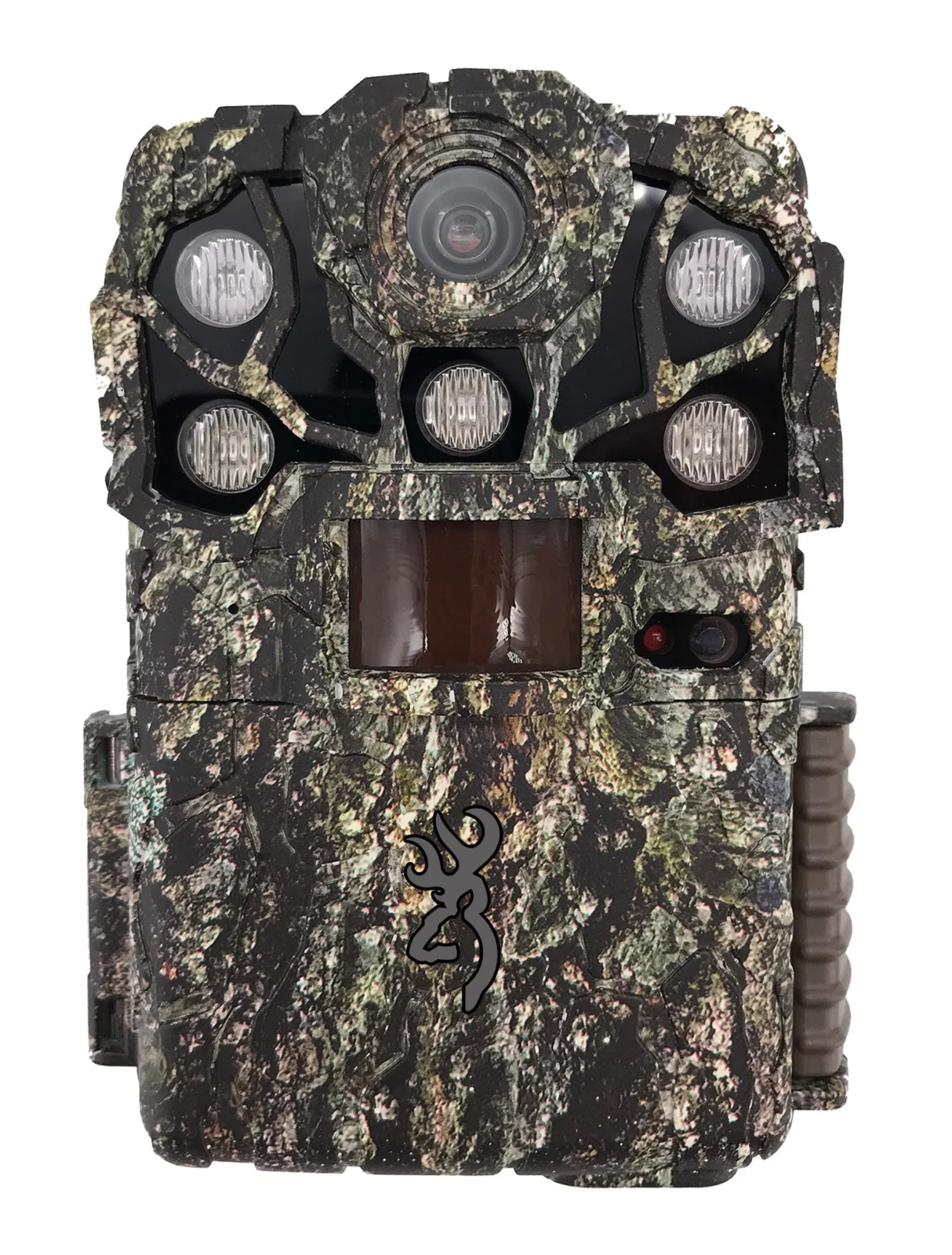
What is the difference between detection range and flash range?
| Spec | What it means | Typical rating |
|---|---|---|
| Detection range | How far away the PIR sensor reacts to a warm, moving animal | 60–100 ft |
| Flash (IR) range | How far the infrared flash lights a subject at night | 60–130 ft |
| Detection angle | How wide the sensor’s trigger zone is | 30°–50° |
| Field of view | How wide the lens sees | 40°–60° (wider on some models) |
A camera can light a deer at 120 ft but never be triggered by it if the deer stays outside the detection zone. When the field of view is wider than the detection angle, deer can walk through the edges of the photo without triggering it.
What affects trail camera detection range?
- Temperature difference. The bigger the gap between body heat and the background, the farther the sensor works. Cold weather extends range; hot weather shrinks it.
- Animal size. A mature buck or elk triggers farther away than a fox or turkey.
- Direction of travel. Animals crossing the sensor’s zones (left to right) trigger more reliably than animals walking straight at the camera.
- Sensitivity setting. High sensitivity reaches farther but causes more false triggers on windy, sunny days.
- Height and angle. A camera aimed too high looks over the deer; one aimed too low sees only the ground nearby.
How far can a trail camera detect motion? Manufacturer ratings
| Camera | Rated detection | Rated flash |
|---|---|---|
| Browning Recon Force Elite HP5 Ultra | Up to 100 ft (adjustable) | 130 ft |
| Browning Strike Force Pro X 1080 | 100 ft | 120 ft |
| Browning Defender Pro Scout Max HD | 100 ft | 100 ft |
| Reconyx HyperFire 4K Ultra HD | 100 ft | 150 ft |
| Tactacam Reveal X 4.0 | 96+ ft | Low-glow |
| Spartan GoLive 3 | 80 ft | 60 ft no-glow |
These are manufacturer ratings under good conditions. Treat them as a ceiling, not a promise.
Is a longer detection range always better?
Not necessarily. A camera that triggers at 100 ft on a scrape 12 ft away will take dozens of photos of deer that are too far away to identify, and each photo uses battery and storage. Long detection is valuable on food plots, field edges and power-line cuts. On scrapes, trails and pinch points, a fast trigger and sharp images at 10–30 ft matter more.
How do you test your camera’s real detection range?
- Mount the camera at your normal height and angle.
- Place markers (flagging tape or stakes) at 20, 40, 60 and 80 ft in front of it.
- Walk slowly across the frame at each distance, left to right, at deer speed.
- Check which crossings triggered photos. Repeat on a warm afternoon and a cold morning to see the difference.
This 10-minute test tells you more about your setup than any spec sheet.
How can you get more detection range?
- Set sensitivity to high in cool weather, medium in heat.
- Angle the camera across the trail so deer cross the sensor zones.
- Clear tall grass and branches that shade or block the sensor.
- Use timelapse mode on fields: it records photos on a schedule regardless of PIR range, which is the only reliable way to see deer at 100+ yards.
Why do trail cameras take empty pictures?
Empty frames usually come from moving vegetation warmed by the sun, a slow trigger that fires after the animal has left, or sunlight hitting the sensor at dawn and dusk. Trim branches, face the camera north or south, and choose a fast trigger (0.5 s or quicker). Browse our trail cameras to compare trigger speeds and ranges.
Does detection range matter more for cellular cameras?
Yes, in one specific way: every trigger on a cellular camera sends a photo, which uses data and battery. A camera that fires on distant, unidentifiable deer or on swaying branches can burn through a monthly photo allowance in days during the rut. For cellular cameras, aim them at specific, close targets such as a scrape or a funnel, set sensitivity to medium on warm days, and use the app’s filters or AI tagging to cut down on junk images.
How does camera height change detection?
The PIR sensor projects its detection zones outward in a fan. At 3–4 feet high and aimed level, the zones cross a deer’s body over a long stretch of ground. Mount the camera at 7 feet without tilting it down and the zones pass over the deer’s back at close range, cutting effective detection dramatically. If you mount high to avoid theft or a buck’s eye line, use a tilting mount and walk-test the result.
What about detection in snow and rain?
Snow on the ground actually helps in some ways: the cold background increases heat contrast, so deer trigger reliably at longer range. Falling snow and heavy rain can cause false triggers, and both reduce the reach of the IR flash at night because the light reflects off water droplets. Check your camera after storms and clear any snow from the sensor window.
Which settings help a camera trigger on distant deer?
Turn sensitivity up, reduce the delay between triggers to 10–30 seconds, and choose a burst of 2–3 photos so a deer crossing the far edge of the zone is captured more than once. If your camera offers a long-range or “fast motion” flash setting, as Browning models do, choose long range for food plots and fast motion for trails where deer move quickly at close range. Finally, keep fresh lithium batteries in the camera: weak batteries can slow the trigger and shorten effective range at night.
Specifications in this guide come from the manufacturers’ official websites: Browning, Reconyx, Tactacam, Spartan. Prices are current at the time of writing; check each product page for today’s price.
Frequently asked questions
How far can a trail camera see at night?
The infrared flash on most cameras lights subjects at 60–100 ft, and some models reach 120–150 ft. Detection range at night is often better than by day because the air is cooler.
Why does my trail camera not detect deer far away?
Warm weather, high background temperature, low sensitivity settings or deer walking straight toward the camera all reduce effective range.
Does detection range drop in summer?
Yes. When the air temperature approaches body temperature, PIR sensors have less contrast to detect, so range can drop by half.
Is detection angle the same as field of view?
No. Detection angle is the width of the trigger zone; field of view is the width of the photo.